The problem, and the shape of the answer
Zero-based budgeting is only as credible as the baseline it is built on. In practice that baseline is scattered: several plan versions in different states of approval, several years of history in formats that have changed, and reported actuals that never quite tie back. The reconciliation work to make those agree had grown into a sprawl of spreadsheets that only a handful of people could operate and nobody could audit.
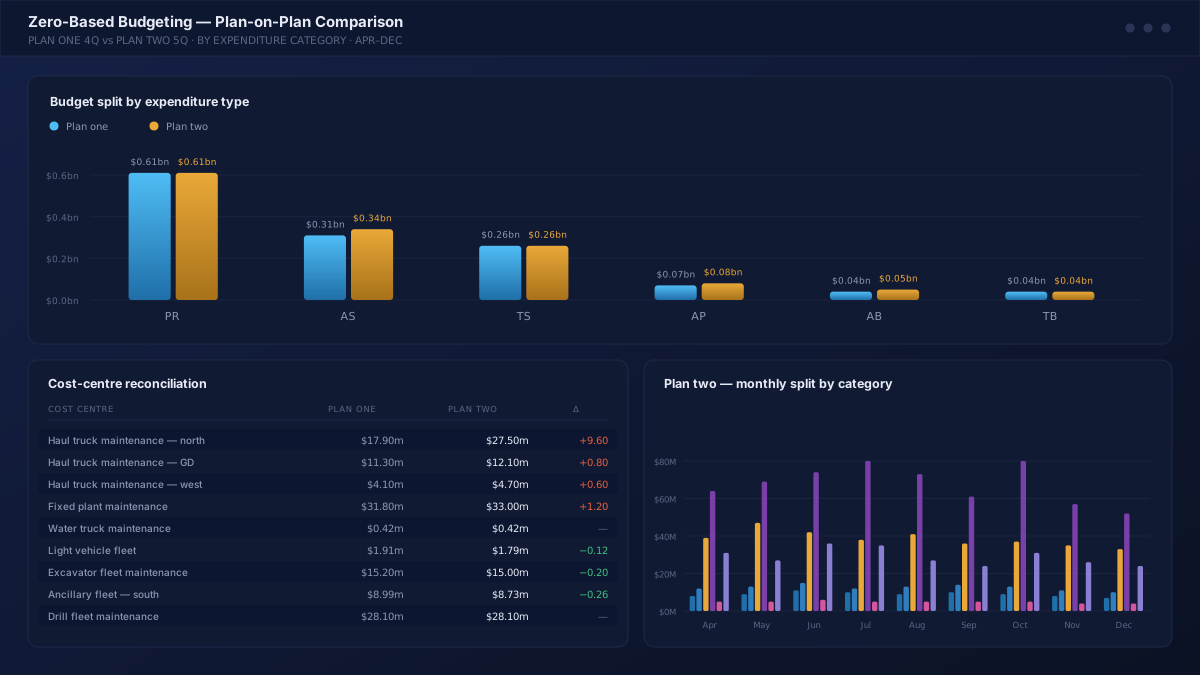
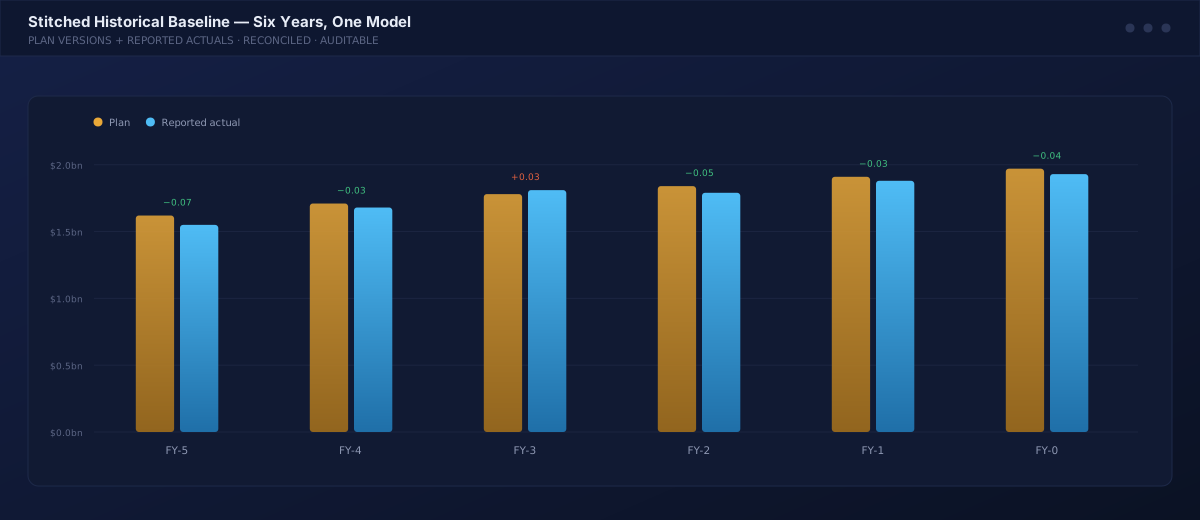
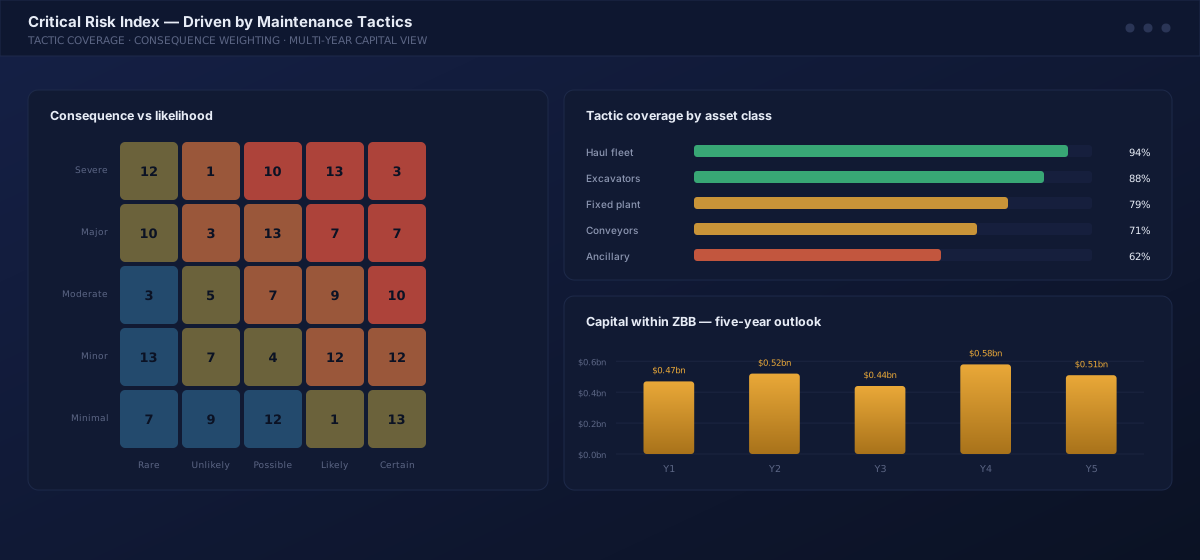
The ZBB Manager Suite replaces that sprawl with one data foundation and five modules built on top of it. A historical stitched view aligns six-plus years of plan and actual onto a consistent structure. A plan-on-plan module compares any two versions — 4Q against 5Q, for instance — by cost centre and expenditure category. A ZBB-with-actuals module reconciles the in-flight year to an end-of-year position. A capital-within-ZBB module carries the same logic into multi-year capital planning. A Critical Risk Index view derives risk directly from the underlying maintenance tactics rather than from a separate, hand-maintained register.
That last module matters more than it first appears. Budget and risk are usually argued in separate rooms with separate numbers. Deriving the risk index from the same tactic data that drives the budget means a proposal to cut a line item shows its consequence immediately, in the same view, on the same evidence.
Everything is versioned and traceable. When a number changes between plan iterations, the suite can show which cost centre, which category and which tactic moved it.
What it does
Historical stitched view — Six-plus years of plan versions and reported actuals aligned onto one consistent cost-centre and category structure
Plan-on-plan comparison — Any two plan versions compared side by side (4Q vs 5Q and equivalents) by cost centre and expenditure category
ZBB with actuals — In-flight year reconciled against the zero-based plan with an end-of-year landing position
Capital within ZBB — Capital planning carried through the same reconciled structure, with a multi-year outlook
Critical Risk Index — Risk derived from the underlying maintenance tactics rather than a separately maintained register, so budget decisions show their risk consequence
Six expenditure categories — Full category-level split maintained consistently across every module and every plan version
Variance attribution — Movement between plan iterations traced to the cost centre, category and tactic that caused it
Auditable foundation — One versioned data model replacing a sprawl of reconciliation spreadsheets, with lineage back to source
Monthly phasing — Category-level phasing across the plan period, not just annual totals
Senior review pack — Review outputs generated from the model rather than assembled by hand ahead of each cycle
How it is built
Data foundation
Reconciliation
Analytics
Domain logic
Engineering
What changed
The suite replaces a sprawl of reconciliation spreadsheets with a single auditable data foundation covering six-plus years of history across more than 100 cost centres and six expenditure categories.
The operational change is in how the annual cycle runs. Preparing a senior review used to begin with a scramble: rebuild the comparison, chase the version that was actually approved, reconcile the difference, then discuss it. Now the comparison already exists and is already reconciled, so review conversations are grounded in a shared model from the first minute.
Deriving the Critical Risk Index from maintenance tactics rather than a parallel register also closed a long-standing gap between the budget conversation and the risk conversation. A proposed reduction and its risk consequence are now visible in the same place, on the same evidence, at the moment the decision is being made.